Whether you’re running a three-day music festival, managing a weekend farmers market, or overseeing a corporate outdoor event, security is one of the hardest logistics problems to solve. Traditional approaches—hiring security guards, installing fixed cameras—either cost too much, take too long to set up, or simply aren’t feasible for a temporary location. Mobile surveillance trailer rental for events has emerged as the practical answer, giving event organizers professional-grade video coverage without permanent infrastructure.
This guide covers everything you need to know before renting a mobile surveillance trailer for your next event—from how these units work to what questions to ask your provider.
Why Events Create Unique Security Challenges
Events concentrate large numbers of people—often strangers—in a defined space for a limited time. That combination creates predictable security risks that permanent camera systems at fixed locations simply weren’t designed to address.
- Concerts and festivals deal with crowd control issues, perimeter breaches, pickpocketing, and alcohol-related incidents across wide, open grounds.
- Outdoor markets and fairs face vendor theft, parking lot incidents, and after-hours loitering once the event closes for the night.
- Corporate outdoor events need coverage for asset protection, guest safety, and liability documentation.
- Temporary parking operations at stadiums or fairgrounds see a disproportionate share of vehicle break-ins and hit-and-run incidents.
Hiring security guards is the traditional answer, but guards can only see what’s in front of them. A camera system provides a permanent, documented record—and with remote monitoring options, it extends the reach of your security team without adding headcount.
The problem is that most events don’t have access to existing camera infrastructure. Running conduit, pulling permits for fixed installations, and wiring power across a temporary venue can cost more than the entire event security budget. That’s the gap mobile surveillance trailers fill.
How Mobile Surveillance Trailers Work
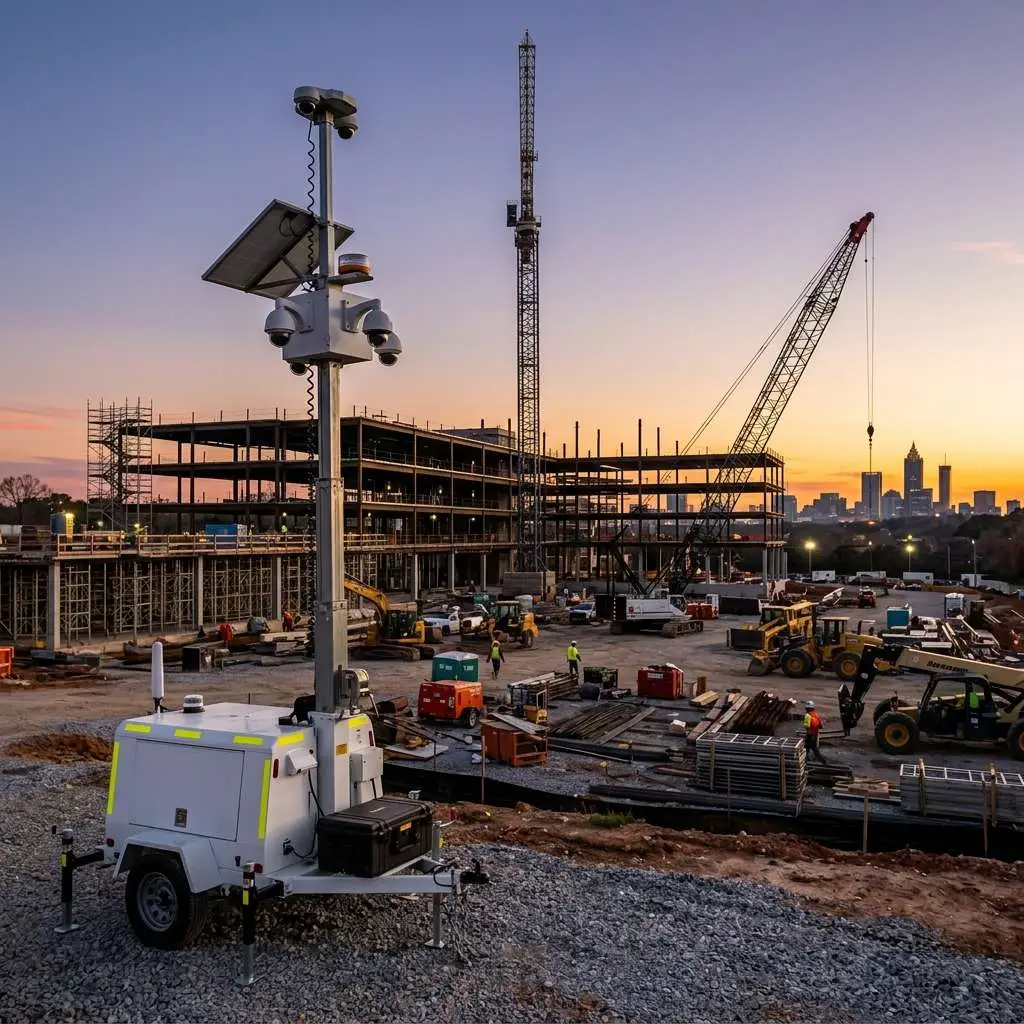
A mobile surveillance trailer is a self-contained security unit mounted on a trailer chassis that can be towed to virtually any location and deployed within hours. Here’s what makes them work for events:
Rapid Deployment
Unlike fixed camera installations that require conduit runs, mounting hardware, and permits, a mobile trailer arrives ready to go. Most units can be positioned, leveled, and operational within 30 to 60 minutes of arrival. For multi-day events, the trailer stays on-site overnight and provides continuous coverage without anyone needing to return and re-setup.
No Fixed Infrastructure Required
This is the biggest practical advantage for event use. You don’t need to coordinate with a venue’s existing camera system, run extension cords across a field, or file for a fixed-installation permit. The trailer is its own island of infrastructure.
Solar Power with Battery Backup
Quality surveillance trailers run on solar panels with onboard battery banks, meaning they don’t need shore power at all. This is critical for outdoor events in parks, fairgrounds, or parking lots where power hookups may be 200 feet away or non-existent. Even on overcast days, properly sized battery banks keep the system running through the night.
Connectivity Without Local Internet
Remote locations are not a barrier. Modern surveillance trailers use Starlink satellite or LTE cellular connectivity to transmit video to a monitoring center or to an app your security team can view in real time. No venue WiFi required. No IT coordination needed.
Elevated Mast for Maximum Coverage
The cameras mount on a pneumatic or telescoping mast, typically extending 20 to 30 feet above ground. At that height, a single trailer with multiple cameras can cover an area that would require a dozen ground-mounted units. For a parking lot or festival field, this changes the math entirely.
What to Look for When Renting
Not all surveillance trailers are created equal. Here is what separates a high-quality rental from one that will leave you with blind spots and headaches during your event:
Camera Count and Coverage Radius
A single trailer typically carries 4 to 8 cameras. Pan-tilt-zoom (PTZ) cameras can cover significantly more area than fixed-angle units because operators can redirect them as incidents develop. For a large event, ask your provider to walk through the camera count relative to your site dimensions. A standard parking lot of 2 to 3 acres can often be covered by a single trailer positioned at the highest natural point. A festival footprint of 10 or more acres will likely need two units positioned at opposite ends.
Connectivity and Monitoring Options
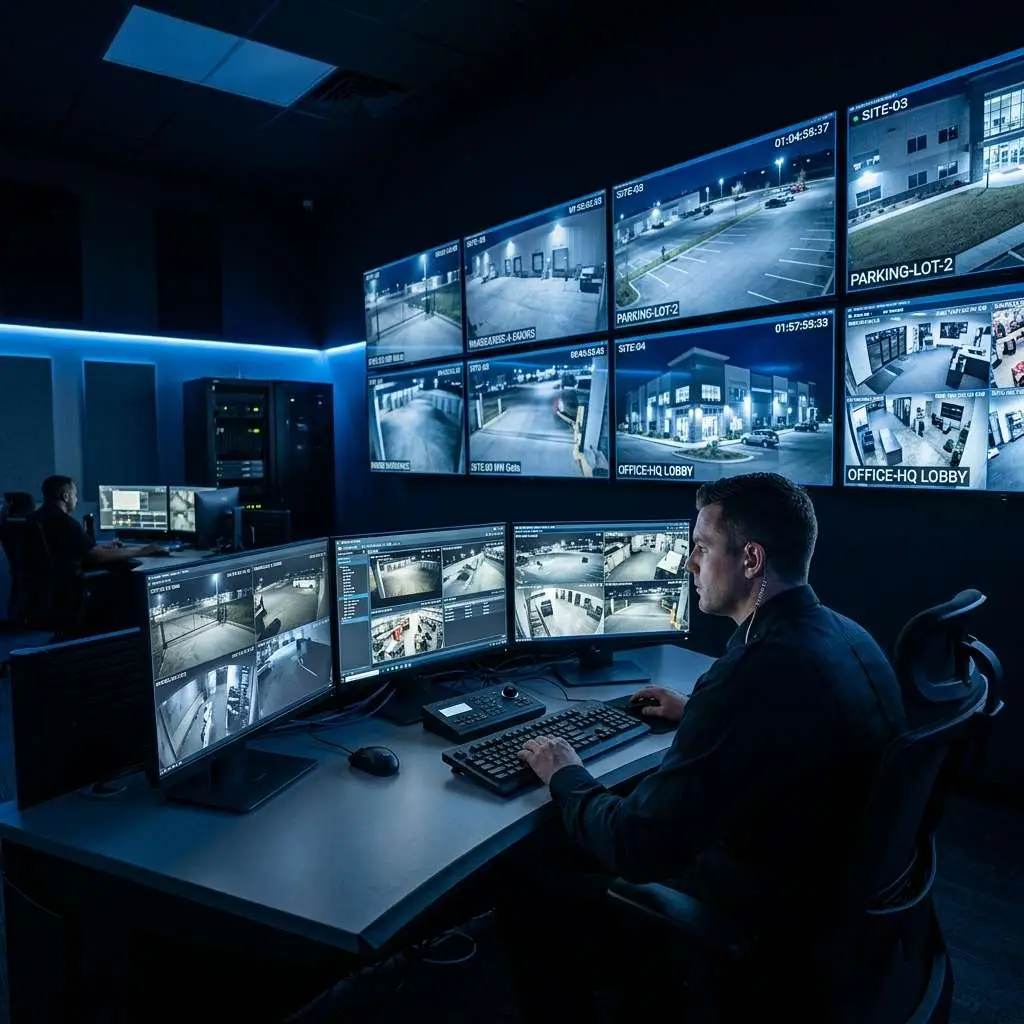
Ask whether the rental includes remote viewing access. Some providers give you an app-based login so your own staff can monitor the feeds. Others offer add-on virtual guard monitoring, where trained operators watch the feeds 24/7 and can alert your on-site team or emergency services when they see a problem. For high-risk events—large concerts, overnight security needs—the monitored option is worth the additional cost.
Weather Protection
Outdoor events happen in outdoor weather. Look for trailers with cameras rated IP66 or higher (fully dust-tight and protected against powerful water jets), an onboard climate control system to protect electronics from heat, and trailer construction that can handle the wind loads from a summer thunderstorm.
Video Storage and Retention
If an incident occurs, you need the footage. Ask about onboard storage capacity and how long footage is retained. A minimum of 30 days of local storage is reasonable; some providers offer cloud backup as well. This matters especially for events with potential liability exposure—if a vendor alleges theft or a guest files an incident report, you want that video available.
How the Rental Process Works
Most surveillance trailer rentals follow a straightforward process:
- Site assessment: You provide the address, a map or aerial image, and describe the coverage area. Your provider identifies how many trailers you need and the optimal placement positions.
- Delivery and setup: The trailer is towed to your site on the scheduled date. The team levels it, raises the mast, confirms the camera angles, and verifies connectivity. Setup typically takes under an hour.
- Active monitoring period: The trailer runs autonomously during your event. If you have added monitoring, your provider’s team watches the feeds. You or your staff can also view live feeds through the provided app.
- Pickup and retrieval: Once your event is over, the provider returns to lower the mast, secure the equipment, and tow the trailer away. For multi-day events, the trailer stays on-site between days.
Event Use Cases Where Surveillance Trailers Shine
Outdoor Concerts and Music Festivals
Festival security teams use mobile trailers at main entry gates, near the stage areas, and at the perimeter. The elevated view gives staff situational awareness that ground-level guards simply cannot match—you can see a crowd surge developing before it becomes a crisis, track a person of interest across a large crowd, and document any incidents for insurance or law enforcement purposes.
Sports Events and Outdoor Venues
Temporary sporting events—charity runs, youth sports tournaments, outdoor league playoffs—frequently use facilities that were not built for large crowd management. A surveillance trailer positioned at the entrance handles monitoring at the gate, while additional units cover the parking lots where most theft incidents occur.
Temporary Construction Zones Near Events
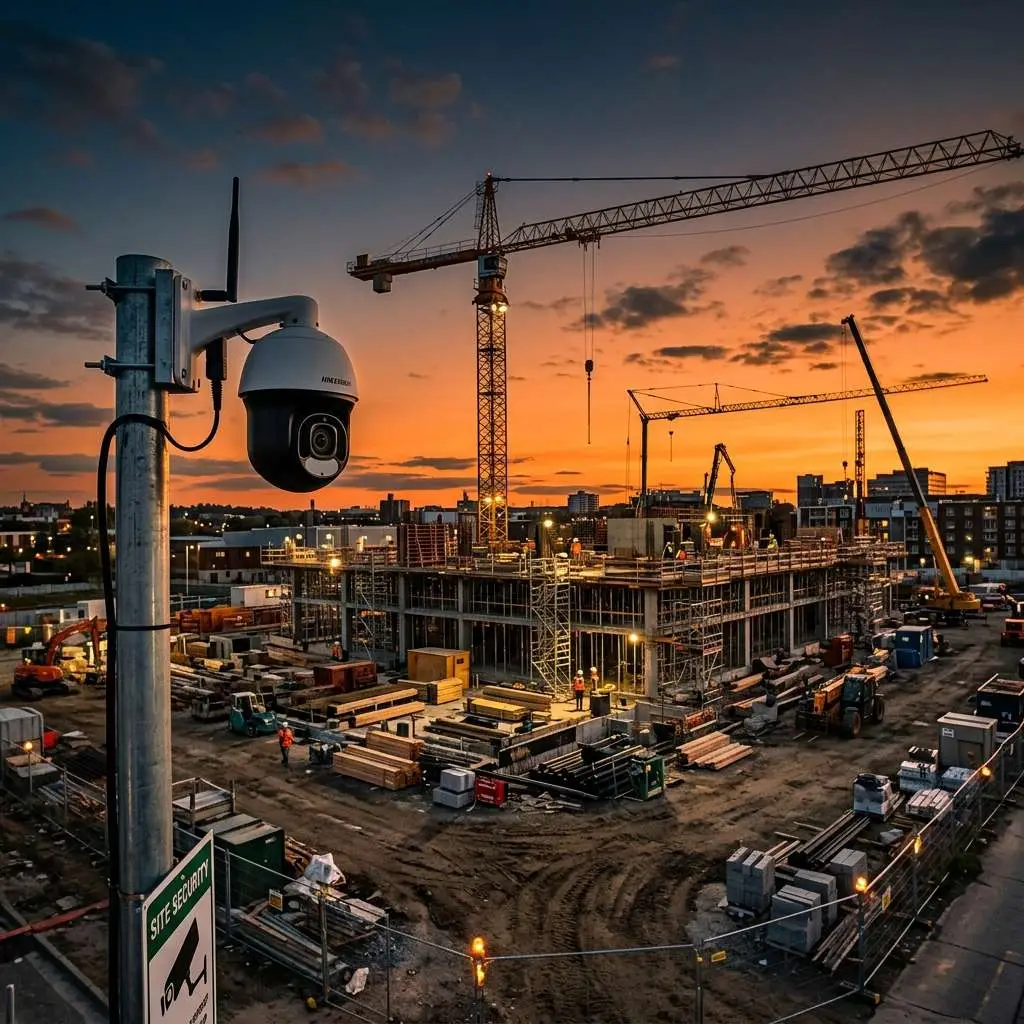
If your event involves construction or temporary structures—stage builds, tent installations, vendor booth setup—a surveillance trailer protects your equipment and materials during the pre-event days when the site is loaded with expensive gear and largely unsupervised. The same trailer can then shift to crowd coverage once the event opens.
Parking Lot Security
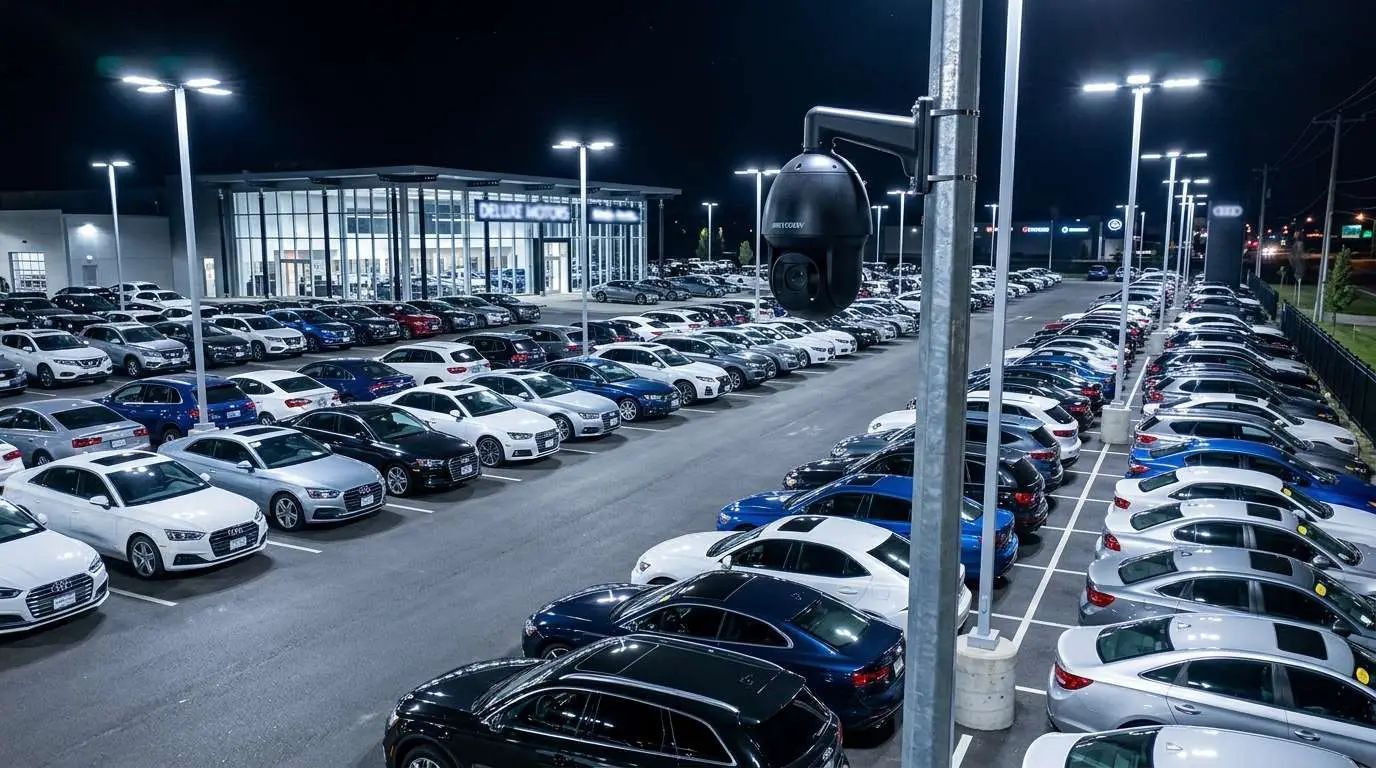
Parking lots are the highest-risk area for most events—they are poorly lit, spread across large areas, and full of unattended vehicles. A single elevated surveillance trailer positioned in the center of a lot can provide near-complete coverage. Pair it with a remote monitoring add-on and you effectively have a virtual parking lot attendant watching for smash-and-grabs, hit-and-runs, and vehicle theft throughout the duration of your event.
What to Expect on Pricing
Mobile surveillance trailer rentals are typically priced on a monthly basis, with standard rates around $1,500 per month for a fully equipped unit with solar power and connectivity. For short-term event use—a single weekend or a 3 to 5 day run—rates are generally structured differently than the monthly model, so it is worth getting a specific quote for your event dates rather than simply dividing the monthly rate.
Factors that affect pricing include:
- Duration of the rental (weekend vs. multi-week)
- Number of units required
- Delivery distance from the provider’s base
- Whether remote monitoring is included
- Connectivity method (Starlink for rural locations may carry a premium)
The most reliable way to get accurate numbers is to call or submit a quote request with your event details, including dates, location, approximate site size, and what you are trying to cover.
Practical Tips Before You Rent
- Book early. Trailer availability is limited. For major summer events, providers may be booked weeks in advance. Confirm availability before you finalize your security plan.
- Get a site walk. If possible, have your provider visit the site in advance to confirm placement and identify any line-of-sight obstacles (trees, tent structures, stage rigging).
- Coordinate with local authorities. For large events, let your local police department know that surveillance trailers are on-site. They may be willing to review footage if an incident requires a follow-up investigation.
- Plan for overnight coverage. Theft and vandalism spike during the nighttime hours between setup and opening day. Make sure your trailer is deployed before the crew leaves on Day 1, not just when the public arrives.
Related Industry Guides
This post is part of our Industry Security Solutions hub — practical guides for businesses and event operators across every sector. Browse the full library to find guidance specific to your industry.
Ready to Secure Your Event?
Edge Business Security Cameras provides mobile surveillance trailer rentals across the Metro Atlanta area and throughout the Southeast. Our trailers deploy quickly, run independently on solar power, and can be monitored remotely by our virtual guard team—so you get professional security coverage without the logistics headache.
Learn more about our Mobile Surveillance Trailer Rental service or contact us directly to get a quote for your event dates. We will assess your site, recommend the right number of units, and handle delivery and setup so you can focus on running a great event.

About the Author
Kevin Harkins is the Director of Sales at Edge CCTV, where he has spent 10 years helping business owners design and implement commercial security camera systems across Atlanta, Birmingham, Chattanooga, and beyond. Starting as an Outside Sales Representative and working his way up through Sales Manager to Director of Sales, Kevin has guided hundreds of businesses through the process of evaluating, specifying, and installing the right system for their facility. More from Kevin Harkins.