What Is an On-Site Security Guard?
An on-site security guard is a licensed security professional who physically patrols your property, monitors entry and exit points, and responds in person to incidents. For decades, businesses across industries have relied on uniformed guards as the default approach to protecting their assets, employees, and customers.
On-site guards provide a visible deterrent, interact with people on the property, and can physically intervene when necessary. However, that physical presence comes at a significant cost — and it comes with real limitations that many business owners don’t fully account for when budgeting for security.
What Is Virtual Guard Monitoring?
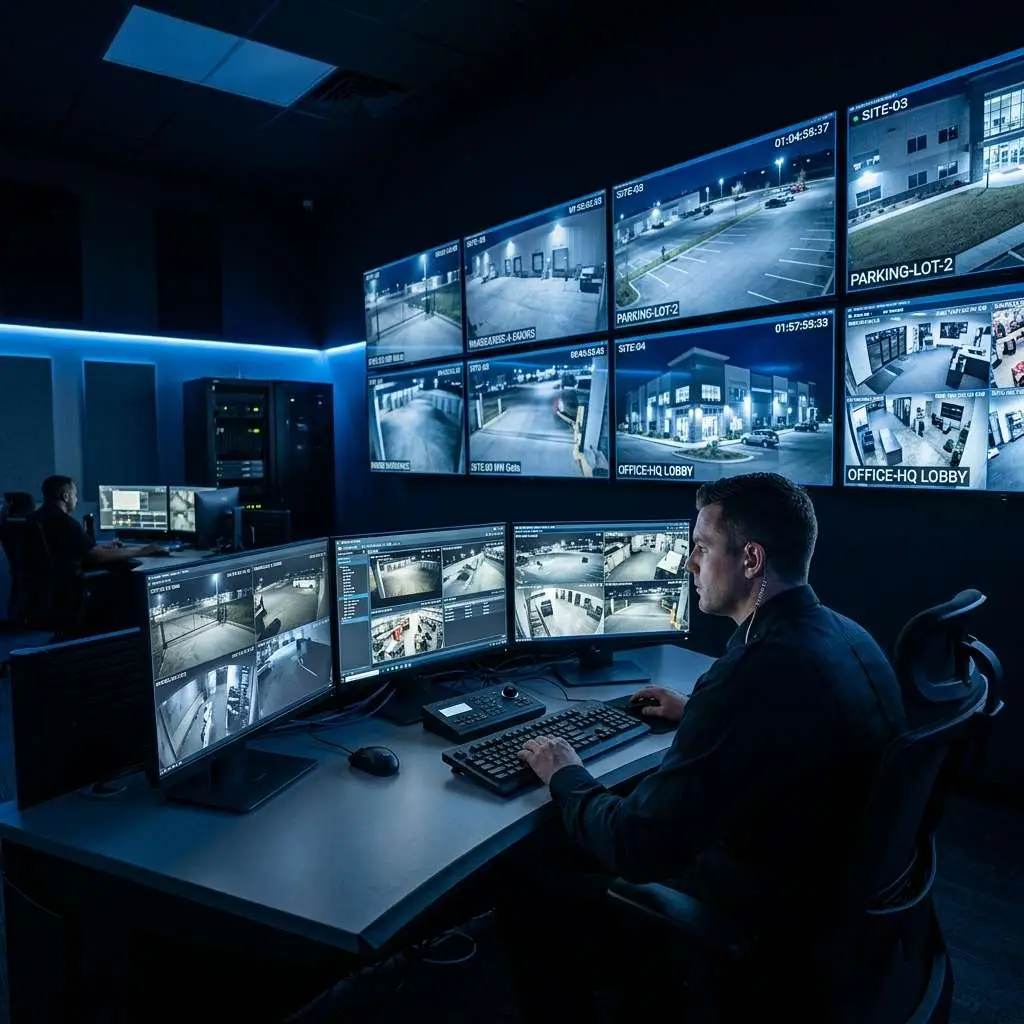
Virtual guard monitoring — sometimes called remote video monitoring or live video surveillance — replaces or supplements the physical guard with a team of trained security operators who watch your camera feeds in real time from a professional monitoring center. When something looks suspicious, they don’t just note it in a log: they respond immediately using two-way audio speakers installed on your property to issue a verbal warning to potential intruders.
If the warning isn’t enough, the virtual guard operator escalates — calling local law enforcement, alerting your on-call manager, or activating additional deterrents. The response happens in seconds, not minutes. And because the operator is watching multiple camera angles simultaneously, there are no blind spots created by a guard walking a route.
Edge CCTV’s virtual guard monitoring service combines IP camera infrastructure, AI-assisted motion analytics, and trained human operators who make every deterrence decision. It is not a fully automated system — a real person reviews every alert before taking action.
Cost Comparison: Virtual Guard vs. On-Site Security Guard
Cost is often the deciding factor for businesses evaluating these two options. Here’s how the numbers break down:
| Factor | On-Site Security Guard | Virtual Guard Monitoring |
|---|---|---|
| Hourly rate | $25 – $45/hr per guard | N/A (subscription model) |
| 24/7 coverage cost | $4,000 – $8,000/month | Typically 60–80% less |
| Overtime & holiday pay | Yes — additional cost | No — flat service rate |
| Training & turnover costs | High (industry has ~300% annual turnover) | None — handled by provider |
| Equipment cost | Minimal | Camera system (one-time investment) |
| Workers’ comp / liability | Required | Not applicable |
| Scalability | Linear — one guard per post | Highly scalable — add cameras, not headcount |
The math is stark. A single guard working 8-hour shifts around the clock requires at least three full-time employees plus overlap for days off, sick leave, and turnover. At $30/hr, that’s over $6,500/month before benefits, taxes, and liability costs. Virtual guard monitoring delivers comparable — and in many cases, superior — coverage at a fraction of that figure.
Response Speed: Who Acts Faster?
This is where virtual guard monitoring often surprises business owners. The assumption is that having a person on-site means faster response. In practice, that’s rarely true.
A physical guard patrolling a 5-acre property might be on the opposite end of the site when an incident begins. By the time they walk or drive to the location, the threat has escalated — or the intruder is already gone. Guards also have a single field of view at any moment: what they can see with their own eyes while standing in a specific place.
Virtual guard operators, by contrast, can see every camera angle on your property simultaneously. The moment an AI analytics flag triggers a review — typically within seconds of unusual movement — the operator is already evaluating the scene and issuing a response. Audio deterrents broadcast directly to the location of the incident within seconds of the AI flag, before an intruder has time to act.
In controlled studies and real-world deployments, live video monitoring with audio response stops incidents before they escalate far more consistently than a guard who must physically travel to the scene.
Coverage: What Can Each Option Actually See?
On-site guards are limited by the laws of physics. One person cannot be in two places at once. No matter how attentive your guard is, there will always be areas of the property they cannot observe in real time. Experienced criminals know this — and they exploit it. Incidents at large properties disproportionately occur in areas a guard cannot cover during their patrol route.
Virtual guard monitoring scales with your camera infrastructure. Add cameras to a back lot, a loading dock, a parking structure, or a remote gate — and those areas are covered just as thoroughly as your front entrance. Operators monitor all feeds simultaneously and can direct attention to any camera instantly when an alert fires.
This comprehensive, simultaneous coverage is particularly valuable for large or irregular-shaped properties: distribution centers, self-storage facilities, automotive dealerships, and construction sites where blind spots are a serious liability.
When an On-Site Guard Is Still the Right Choice
Virtual guard monitoring is not the right fit for every situation. There are use cases where physical presence genuinely adds value that technology alone cannot replicate:
- Access control at high-traffic entry points — verifying IDs, issuing visitor badges, managing crowds
- First response in high-crime areas where a visible uniformed presence is required by insurance or local ordinance
- Events and temporary venues that don’t have permanent camera infrastructure
- Properties where physical intervention (escorting someone off-premises, breaking up a fight) is an expected and frequent need
In many of these cases, virtual guard monitoring and on-site guards are not mutually exclusive — they are complementary. A single guard plus virtual monitoring covers far more ground than that guard working alone, at a total cost well below staffing a full security team.
Industries Where Virtual Guard Monitoring Wins
Certain business types consistently benefit most from making virtual guard their primary security model:
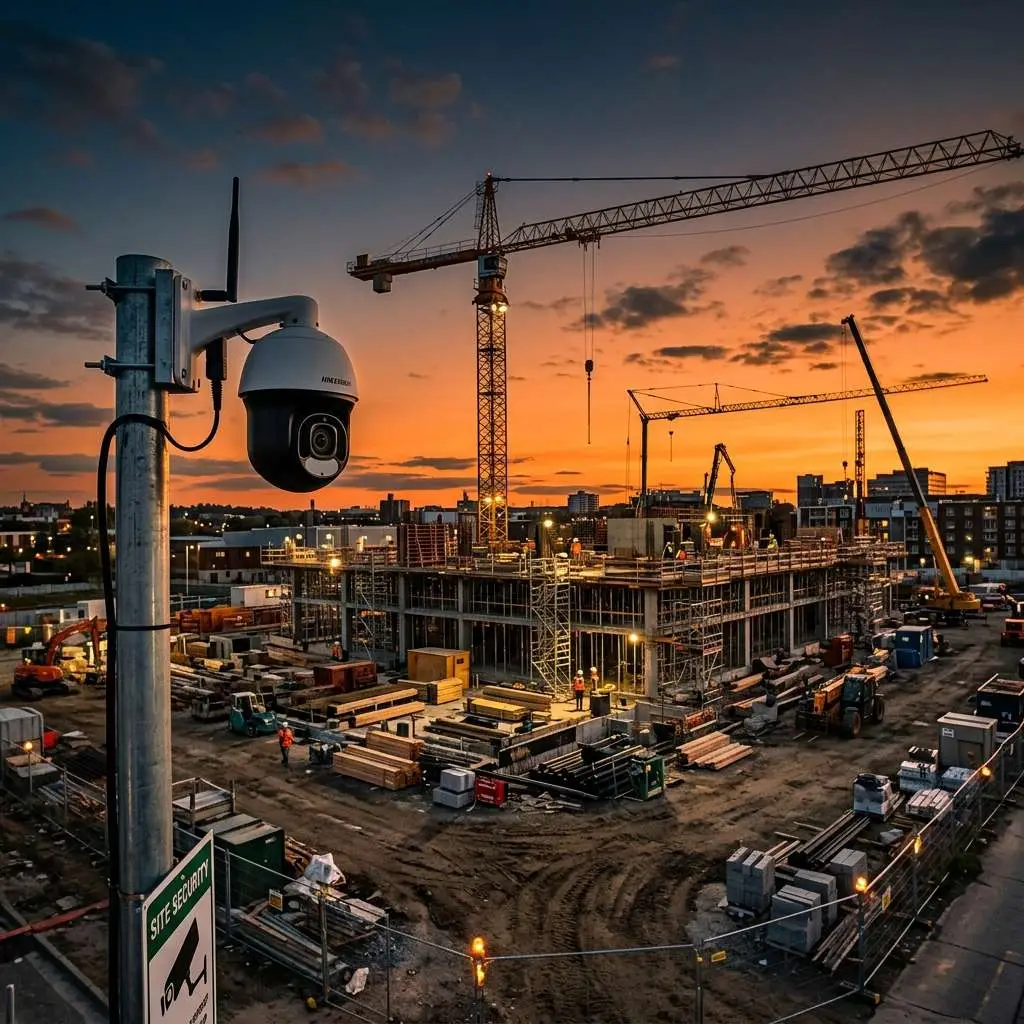
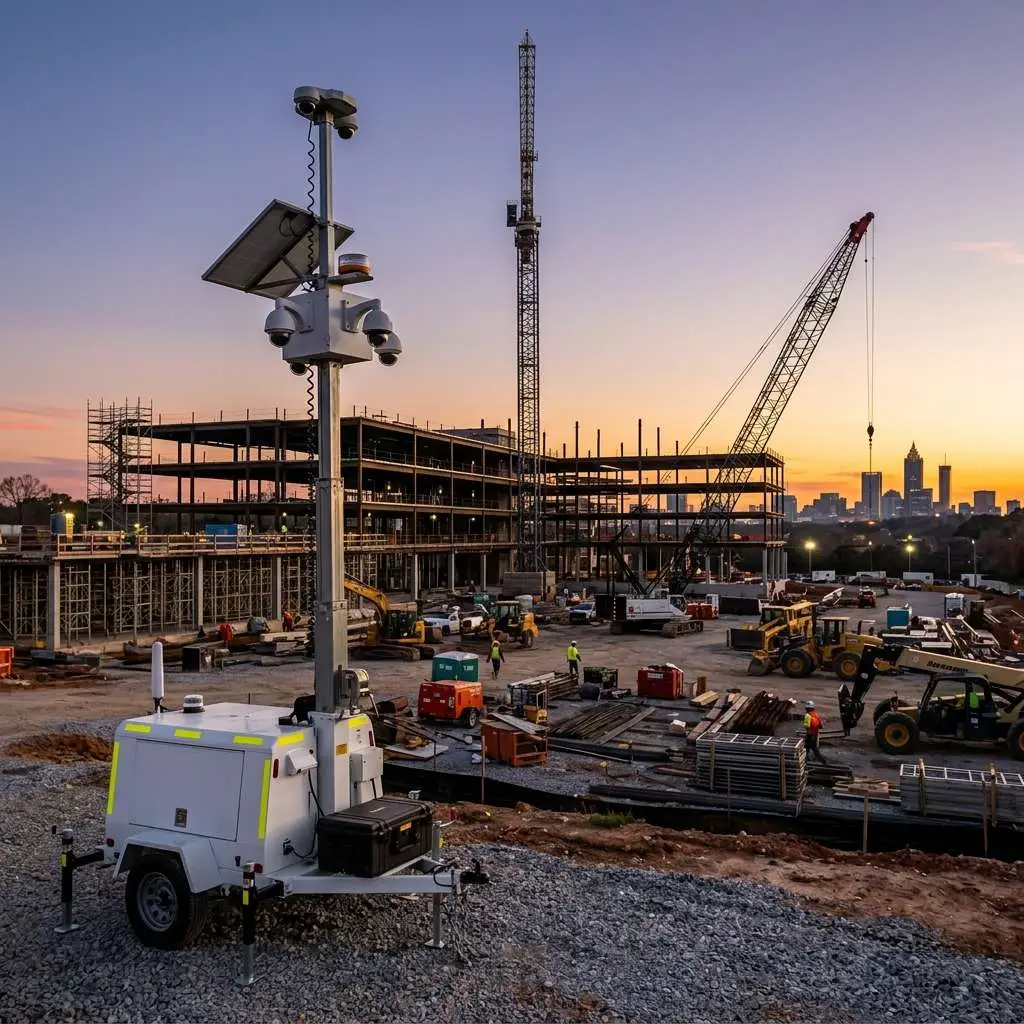
Construction sites: High-value equipment and materials sitting on an open lot overnight is an irresistible target for theft. Physical guards at construction sites are expensive and often ineffective on large, dark, multi-acre properties. Virtual monitoring with audio deterrence stops copper thieves and equipment theft before it starts.
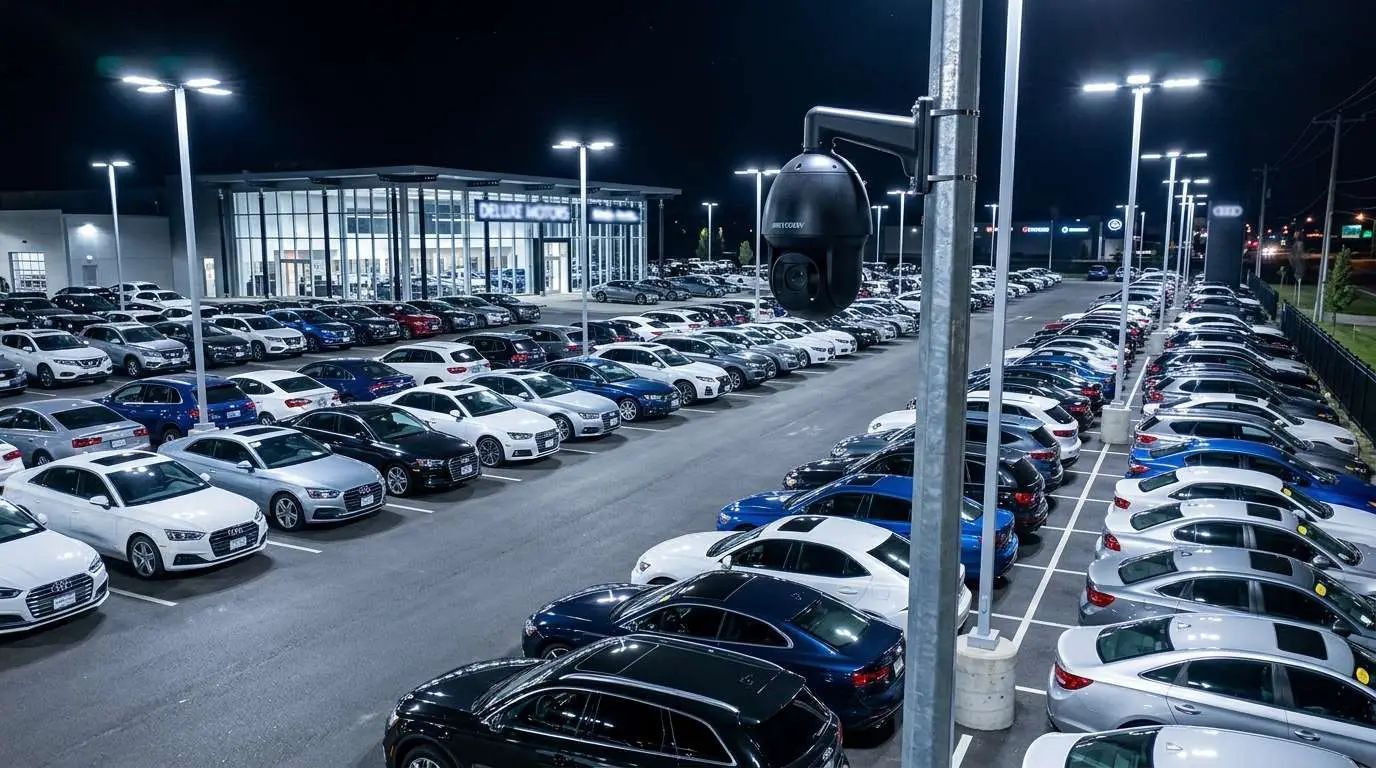
Automotive dealerships: Car lots are among the most frequently targeted properties for catalytic converter theft and vehicle break-ins. Virtual guards monitor the entire lot perimeter simultaneously and can respond to activity near any vehicle within seconds — no patrol route lag.
Warehouses and distribution centers: Large interior and exterior footprints with shift changes, loading dock access, and high-value inventory. Virtual guard coverage of dock doors, parking areas, and perimeter fencing provides the comprehensive coverage that on-site guards simply cannot match at scale.
Self-storage facilities: These properties need after-hours security but typically can’t justify the cost of a full-time guard. Virtual monitoring provides professional coverage during nights and weekends at a sustainable price point.
Multi-location businesses: Rather than staffing guards at each location, a single virtual guard monitoring contract can cover all locations simultaneously — a massive efficiency advantage for franchises, retail chains, and property management companies.
The Bottom Line
Virtual guard monitoring doesn’t just cost less — it often provides objectively better security outcomes for the majority of commercial properties. Faster response times, complete simultaneous coverage, no staffing headaches, and a consistent service standard that doesn’t vary based on who showed up for their shift that night.
On-site guards still have a role, particularly at high-traffic public-facing properties or where physical intervention is a regular requirement. But for the vast majority of commercial properties — parking lots, warehouses, construction sites, dealerships, storage facilities — virtual guard monitoring delivers better protection at a dramatically lower cost.
If you’re currently paying for security guard staffing or evaluating options for a new facility, it’s worth getting a professional assessment to see whether virtual guard monitoring makes sense for your property layout and risk profile.
Learn about Edge CCTV’s Virtual Guard Video Monitoring service — or contact us to schedule a free security assessment for your property.
Part of the Edge CCTV Industry Security Guide
Explore security camera solutions, virtual monitoring, and surveillance strategies by industry: Security Cameras by Industry — Edge CCTV

About the Author
Kevin Harkins is the Director of Sales at Edge CCTV, where he has spent 10 years helping business owners design and implement commercial security camera systems across Atlanta, Birmingham, Chattanooga, and beyond. Starting as an Outside Sales Representative and working his way up through Sales Manager to Director of Sales, Kevin has guided hundreds of businesses through the process of evaluating, specifying, and installing the right system for their facility. More from Kevin Harkins.