Security Camera Planning for HOA Board Members and Property Managers
If you serve on an HOA board or manage a gated community, security camera decisions are among the most impactful investments you will make for your community. A well-designed system deters crime, documents incidents, reduces liability, and directly supports property values. A poorly planned system wastes association funds and creates privacy conflicts that consume board meeting agendas for years. This guide covers everything you need to know to make informed decisions about HOA security camera systems.
Why HOA Communities Need Professional Security Camera Systems
Gated communities and HOA-governed neighborhoods across Metro Atlanta are experiencing the same property crime trends affecting the broader region. Vehicle break-ins in community parking areas, package theft at centralized mailbox stations, vandalism to amenity buildings, and unauthorized access through pedestrian gates are all increasing. Communities in Gwinnett, Forsyth, Cherokee, and Henry counties are particularly affected as rapid suburban growth outpaces the ability of local law enforcement to patrol every neighborhood.
Beyond crime deterrence, security cameras serve critical liability functions. Slip-and-fall incidents at the community pool, equipment injuries in the fitness center, and vehicle accidents in parking areas all generate insurance claims that are dramatically easier to resolve with clear video evidence. Communities without documented footage often pay inflated settlements simply because they cannot prove what actually happened.
Property values are also directly affected. Communities with visible, professional security infrastructure consistently command higher home prices and attract more qualified buyers than comparable neighborhoods without security coverage. Real estate agents in the Atlanta market increasingly list security camera systems as a community amenity alongside pools and clubhouses.
Camera Placement for Common Areas
The principle is straightforward: cameras belong in every area the HOA is responsible for maintaining, and nowhere that intrudes on private residential spaces.
What to Cover
- Swimming pools and pool decks: Liability exposure is highest here. Cameras document after-hours trespassing, safety compliance, and injury incidents. Weather-rated cameras with night vision are essential since pools attract unauthorized use after dark.
- Clubhouses and event spaces: Cover entrances, main gathering areas, and kitchen facilities. These spaces host community events, private rentals, and board meetings, all of which benefit from video documentation.
- Playgrounds and parks: Wide-angle cameras cover play equipment areas. This deters vandalism, documents maintenance conditions for liability purposes, and provides accountability for supervised activities.
- Fitness centers: Equipment injury documentation and after-hours access monitoring. Cameras positioned at entrances and across the equipment floor, never in changing areas or restrooms.
- Mailbox stations and package areas: Centralized mail and package delivery areas are prime theft targets. A single high-resolution camera covering the mailbox bank and any package locker system provides clear documentation of every interaction.
What NOT to Cover
Never install community-owned cameras that view private residential yards, windows, patios, or balconies. Even if a homeowner’s property backs up to a common area, camera angles must be carefully designed to exclude private spaces. This is the single most common source of resident complaints about security camera systems, and it is entirely avoidable with proper system design.
Gate and Entrance Monitoring
Community entrances are the most critical camera locations in any gated neighborhood. Every vehicle and pedestrian entry point needs high-resolution coverage that captures clear identification-quality images of everyone entering and exiting the community.
Modern gate camera systems integrate directly with your access control infrastructure. When a resident uses their transponder or a visitor enters a gate code, the camera captures synchronized video that pairs the access event with footage of the vehicle and occupants. This creates an auditable log that is invaluable for investigating incidents that may not be reported until hours or days after they occur.
Tailgating — where an unauthorized vehicle follows a resident through the gate before it closes — is one of the most common security failures in gated communities. Cameras positioned to capture the full gate lane document every tailgating event, giving management the evidence needed to address the problem through resident communication or gate timing adjustments.
Parking Lot and Garage Coverage
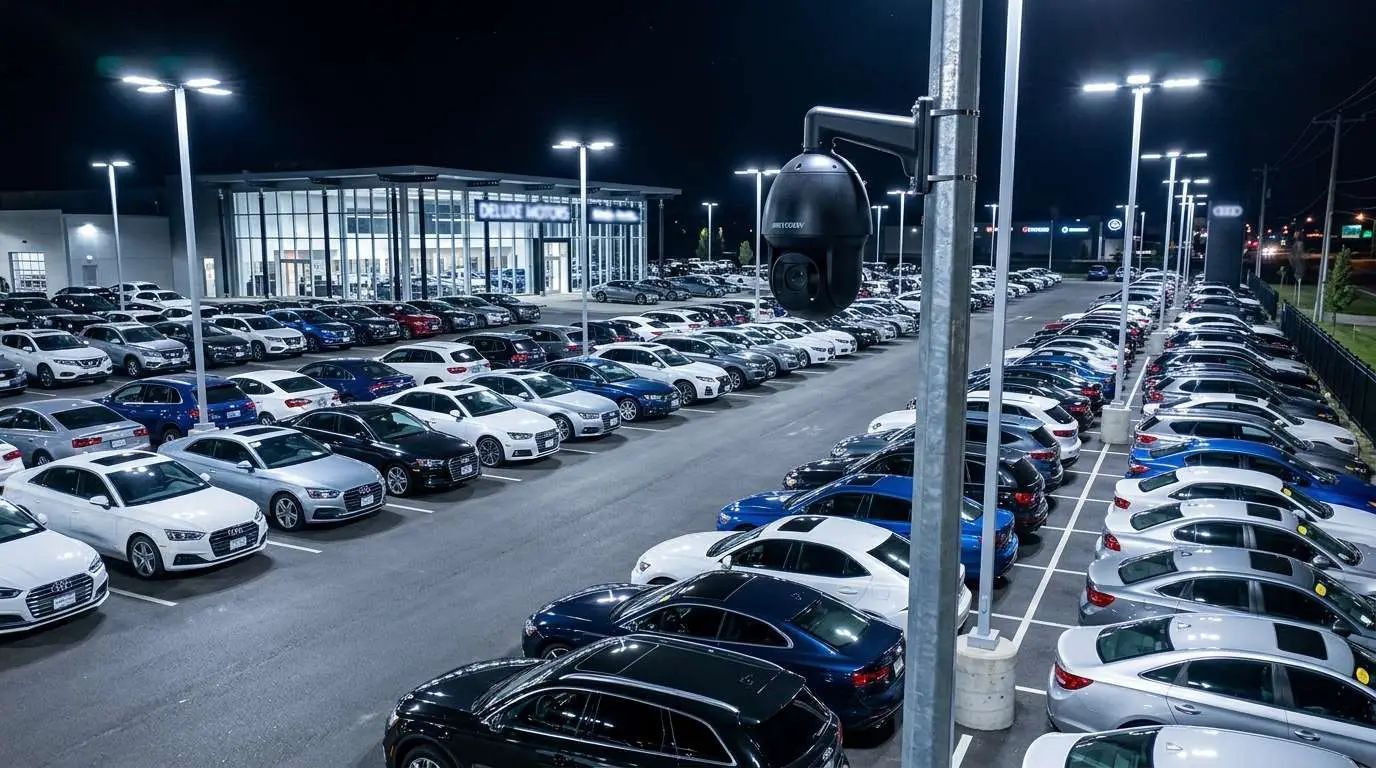
Community parking areas — whether surface lots at the clubhouse or covered garages in townhome and condominium communities — are consistently the highest-crime areas within HOA properties. Vehicle break-ins, catalytic converter theft, hit-and-run damage, and vandalism all occur in parking areas, and they generate the majority of security-related complaints from residents.
Effective parking coverage requires a combination of wide-angle cameras for overall surveillance and targeted cameras at entry/exit points, stairwells, and elevator lobbies. Infrared capability is essential for covered structures where lighting is inconsistent, and virtual guard monitoring provides overnight oversight that catches incidents in progress rather than documenting them after the fact.
How to Get HOA Board Approval for Security Cameras
Getting a security camera proposal approved at a board meeting requires preparation that goes beyond the technical specifications. Board members and residents want to understand the business case, the privacy implications, and the ongoing costs.
Presenting ROI to the Board
- Insurance premium reduction: Many insurance carriers offer discounts for professionally monitored security systems. Request a quote from your carrier with the proposed system specifications before the board meeting.
- Incident cost avoidance: Document recent incidents — vandalism repairs, unresolved vehicle damage, theft losses, and liability claims — and calculate the actual costs the community has absorbed. A single pool injury claim that settles for ,000 can justify a multi-year security camera investment.
- Property value impact: Contact a local real estate agent to provide a letter documenting how security infrastructure affects comparable community property values.
Addressing Resident Privacy Concerns
The most common objection to HOA security cameras comes from residents worried about surveillance of their private property. Address this directly in your proposal by documenting exactly which areas cameras will cover, confirming that no cameras will view private residences, and referencing your community’s CC&Rs regarding common area management authority. Our guide on HOA security camera rules and best practices covers the legal and governance framework in detail.
Vendor Selection
Avoid selecting a security vendor based solely on the lowest bid. Evaluate experience with HOA and multi-tenant environments specifically, warranty terms, ongoing maintenance offerings, and local service response capability. A commercial-grade system with professional installation will outperform and outlast consumer-grade equipment by years.
Cloud-Based Access for Board Members and Property Managers
Modern security systems provide browser-based and mobile access that lets authorized board members and property managers view live feeds, pull incident clips, and review activity reports from anywhere. This is particularly valuable for property management companies that oversee multiple communities — a single dashboard can display camera feeds across every managed property without driving between sites.
Key features board members should expect:
- Role-based access: Board president and property manager get full access; committee chairs may get limited access to specific cameras relevant to their responsibilities.
- Incident clip export: Authorized users can download specific video clips for insurance claims, police reports, or CC&R violation documentation without involving the security vendor.
- Activity summaries: Automated reports showing camera health, storage status, and access log summaries for monthly board meeting review.
- Mobile notifications: Real-time alerts for after-hours motion detection at gates, pools, and amenity buildings.
Maintenance Contracts and Long-Term Support
Outdoor cameras in the Southeast take a beating. Georgia summers push 95 degrees with high humidity, afternoon thunderstorms are a daily occurrence from May through September, and pollen season coats everything in a yellow film. Cameras that perform flawlessly at installation can degrade significantly within 12 to 18 months without proactive maintenance.
Edge CCTV offers ongoing maintenance contracts that include quarterly camera cleaning and inspection, firmware updates, lens alignment verification, and priority service response for any issues. These contracts are structured as predictable annual costs that HOA boards can budget for, eliminating surprise repair expenses that disrupt operating budgets.
Why Atlanta HOA Communities Choose Edge CCTV
Metro Atlanta’s planned community market has grown dramatically over the past decade, with master-planned neighborhoods and HOA-governed subdivisions now representing the majority of new residential construction across Forsyth, Cherokee, Paulding, Henry, and Newton counties. Edge CCTV has been providing commercial security installations across this region for over 15 years, and we understand the governance, budget, and privacy dynamics unique to HOA-managed communities.
Every engagement begins with a free campus walk-through where we assess gate infrastructure, common area layouts, lighting conditions, and network connectivity. We then present a system design to your board with clear documentation of camera placements, coverage areas, privacy exclusions, and phased implementation options if budget requires it.
Ready to Secure Your Community?
Contact Edge CCTV for a free, no-obligation security assessment of your HOA community. We will walk your property with your board representative, map camera placements to your specific layout, and present a proposal that addresses your community’s security priorities within your budget framework. Schedule your assessment today.
Related Guide
Explore security solutions tailored to your industry. See All Industries We Serve →

About the Author
Kevin Harkins is the Director of Sales at Edge CCTV, where he has spent 10 years helping business owners design and implement commercial security camera systems across Atlanta, Birmingham, Chattanooga, and beyond. Starting as an Outside Sales Representative and working his way up through Sales Manager to Director of Sales, Kevin has guided hundreds of businesses through the process of evaluating, specifying, and installing the right system for their facility. More from Kevin Harkins.